Rats and mice
Why Do Some Areas Have More Rats Than Others?
By Pete's Pest Control ToowoombaFirst published Facts checked
Rats live wherever they can find food, water and shelter, so some streets, suburbs and towns simply offer them more.
Here's what draws rats to an area, where they like to nest and how to make your home a place they pass by.

Food Is the Biggest Draw
Rats eat a wide range of foods, and the Australian Museum notes that the black rat eats just about anything, which helps explain its success in towns and cities.
Around a home, household rubbish, compost, pet food and fallen fruit all add to what's on offer.
The University of California's pest management program notes that rats occasionally burrow beneath or around compost piles, particularly when meat, fish, eggs or eggshells go in.
When food, water and shelter are all easy to find, the same program notes that rat numbers can increase quickly.
Shelter and Nesting Spots
Rats also need a safe place to nest, out of sight and undisturbed.
The black rat and the brown rat are both introduced species that live alongside people, and they nest in different places.
Where rats nest
- Roof cavities and wall cavities, favourites of the black rat, which is a very agile climber
- Trees, shrubs and dense vegetation such as ivy
- Burrows along building foundations, under rubbish or woodpiles and around gardens, typical of the brown rat
- Stacks of firewood
- Enclosed spaces indoors, such as ceiling voids and cabinets
Both species build their nests from shredded materials.
Rats are mostly active at night, which is why scratching in the roof after dark is a common sign they've moved in.
People, Towns and Rat Numbers
Rats live closely alongside people, and the Australian Museum notes that the black rat is most commonly seen in urban environments.
The brown rat is closely associated with people too, and it's common in coastal urban areas.
In 2025, a University of Richmond study of public complaint and inspection data from 16 cities found that 11 of them had significant increasing trends in rat numbers.
Cities with denser human populations and more urbanisation saw larger increases in rats.
Climate and the Breeding Season
Climate plays a part as well.
The University of Richmond study found that cities with greater temperature increases over time saw larger increases in rat numbers.
The researchers suggest warmer temperatures may lengthen the season when rats are active above ground, and even an extra week or 2 can mean 1 or 2 more rounds of breeding.
Rats breed quickly once conditions suit them, and the University of California notes that a female brown rat averages 4 to 6 litters a year and can wean 20 or more young.
The Australian Museum notes that a female black rat can have up to 6 litters a year.
Rats and Your Family's Health
The CDC says that worldwide, rats and mice spread over 35 diseases.
In Australia, NSW Health lists infections that mice, rats and other rodents can carry, including leptospirosis, rat bite fever and gut infections such as salmonellosis, and notes that they're rare.
These infections can spread through contact with rodents, or through food or water contaminated by their urine or droppings.
If you're concerned about your health after contact with rats, check with your GP.
Our article on mice and your family's health covers safe clean-ups in more detail.
Making Your Home Less Inviting to Rats
The University of California's pest management program describes sanitation as fundamental to rat control, and sealing gaps as the most successful and longest-lasting strategy around buildings.
- Keep bins covered with tight-fitting lids, and put rubbish and garden debris out regularly.
- Keep compost in a rigid plastic or metal bin with a tight-fitting lid.
- Pick up fallen fruit and nuts from under your trees.
- Feed pets outdoors only what they'll eat in 1 sitting, or bring the food inside at night, and store pet food in rodent-proof containers.
- Trim back tree branches that overhang the roof, so rats have no easy way up onto it.
- Seal holes larger than about 6 mm, and close gaps under doors, since young rats can squeeze under a door with a gap of about 13 mm.
If rats have already moved in, our rodent control in Toowoomba finds the nests and the way in, and treats them at the source.
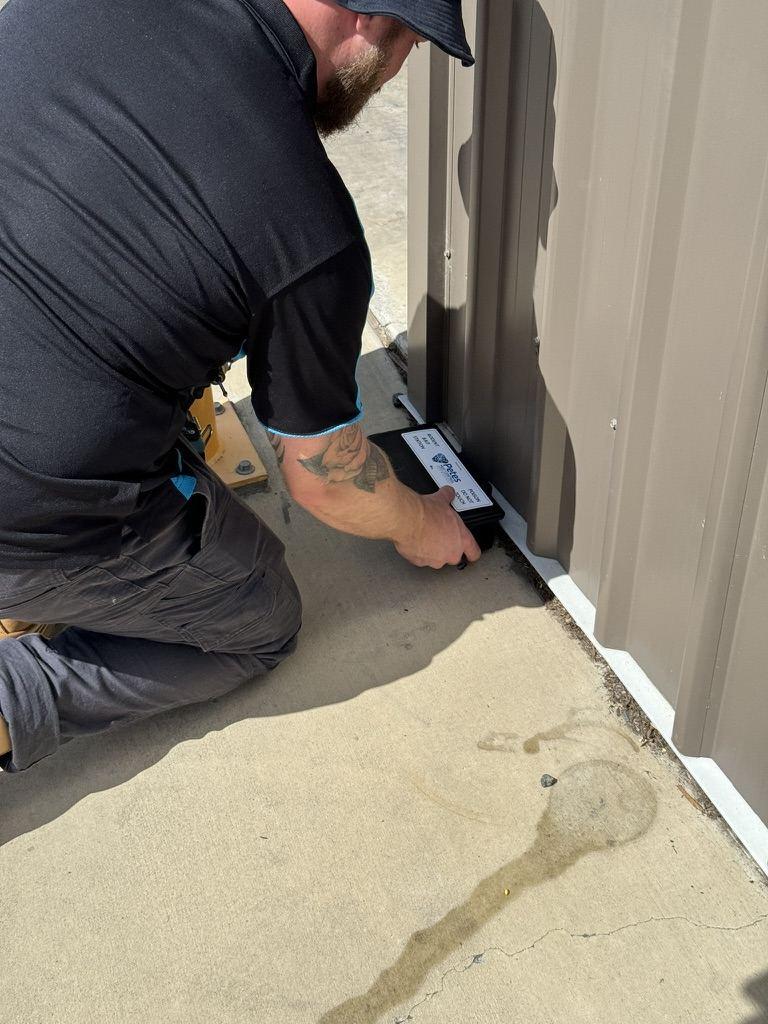
Rodent stations come supplied and installed as part of the service.
For businesses, our commercial pest control includes a rodent management plan with tamper-resistant stations tracked through a digital portal.
Sources
We checked the facts in this article against these sources on .
- University of California IPM, Rats
- The Australian Museum, Black Rat
- The Australian Museum, Brown Rat
- University of Richmond, New study shows increases in rat populations around the globe are linked with warming temperatures and growth of cities
- CDC, The Story of CDC: Environmental Health
- NSW Health, Staying healthy during a mouse plague